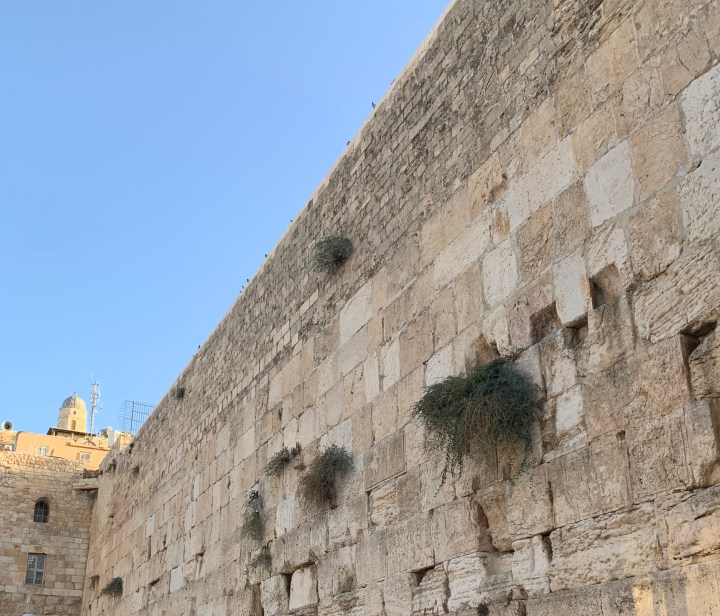
A very early wake-up call (5:30) signified a busy day. At sunrise we began walking through our home base at the Knights Palace in the Christian quarter of the Old City to the Western Wall, a remnant of an ancient wall that surrounded the Jewish Temple’s courtyard. We had to undergo a security check before entering the large plaza area. Sometimes known as the Wailing Wall to Westerners, the constant praying there is an astonishing sight. Men and women go to separate sections, with the men located closest to the original site of the Holy of Holies in the Temple. Thousands of bits of paper have been stuck in the wall cracks; they are prayers to God. Many sway and chant as they pray for the peace of Jerusalem.
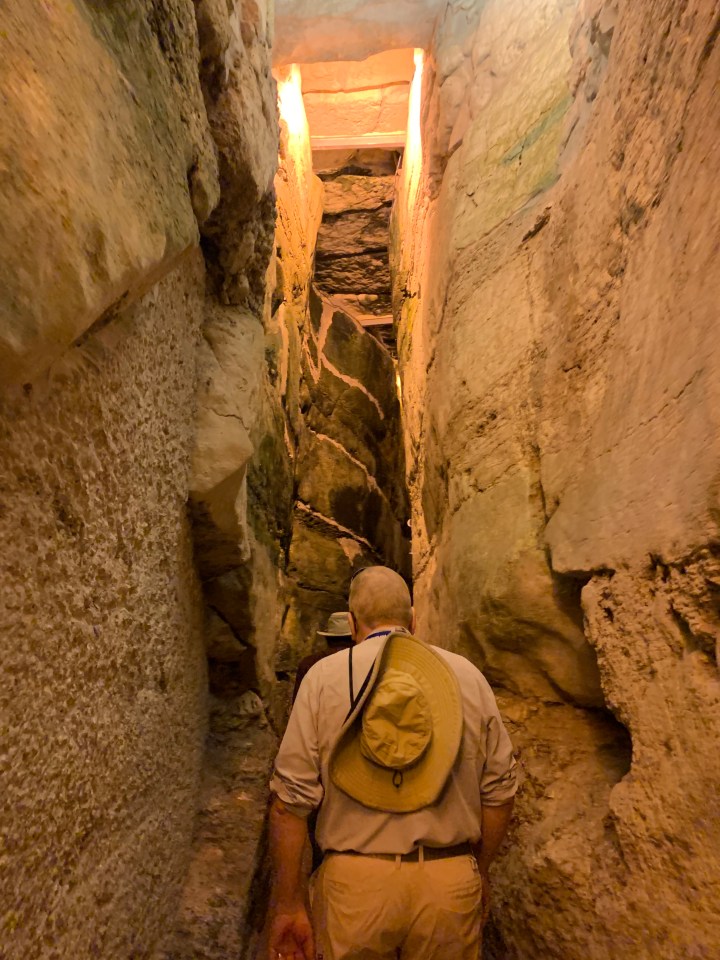
Because of size limitation, we split into two groups to go through the Western Wall Tunnel. Passageways are still being excavated. The tunnel exit comes out at the remains of a fortress believed to be the place where Jesus went on trial before Herod.
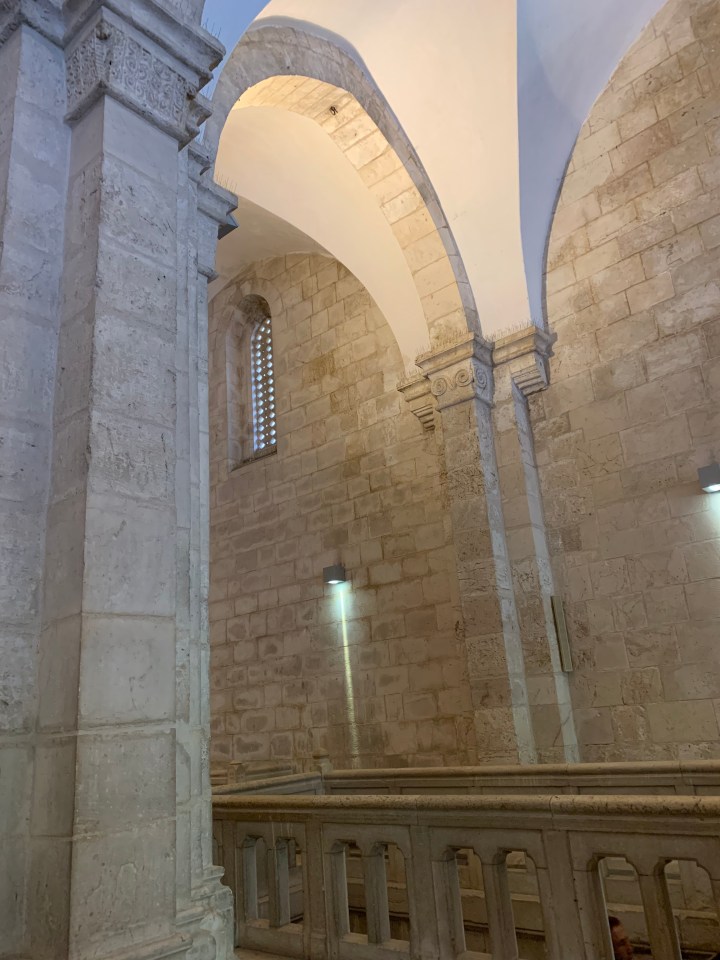
Rather than go to the Church of the Sepulcher today where the last Stations of the Cross are located, we walked to the Church of St. Anne, probably the best-preserved Crusader-era church. Anne is said to be the Virgin Mary’s mother, and this building marks Mary’s birthplace. We sang along with a group of worshippers after entering, and then one of our own young ladies in our group sang a beautiful solo.
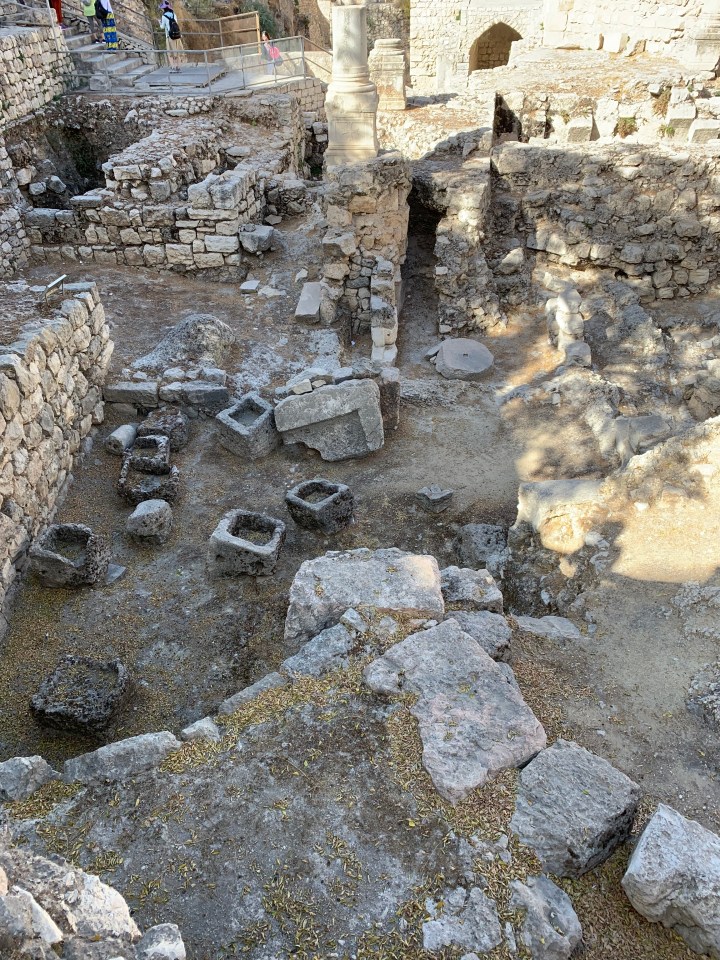
Outside the church stands the ruins of the Pools of Bethesda, where the Apostle John records that Jesus healed a man who had been lame for 38 years. Not being just one pool, we walked down into the areas which included the ruins of a Byzantine church.
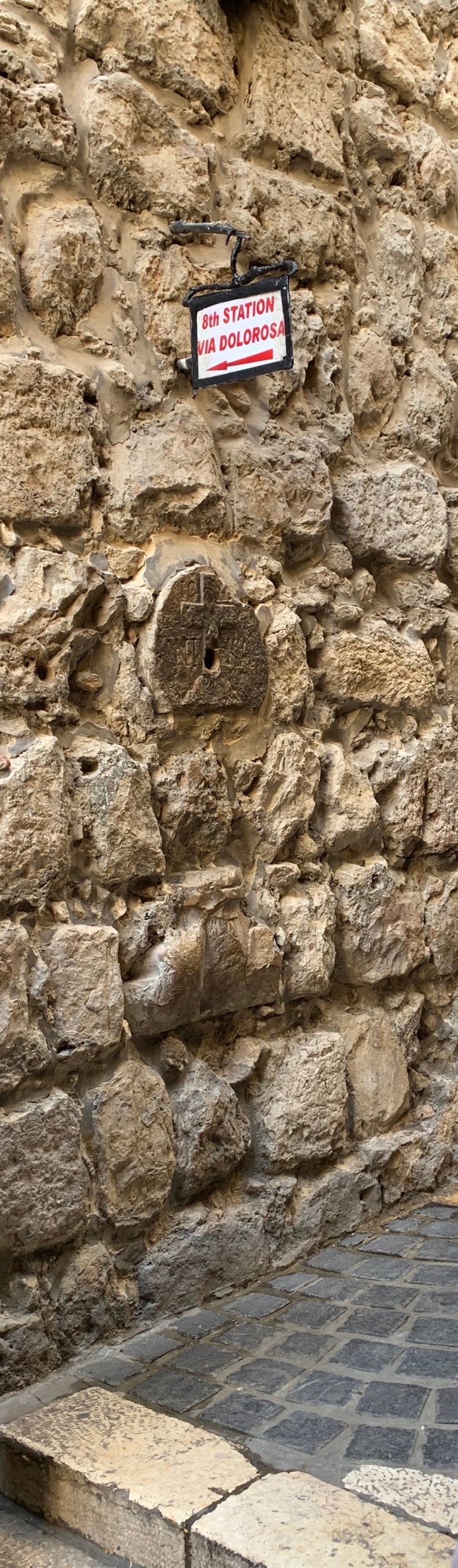
We then walked along the Via Dolorosa, viewing some of the Stations of the Cross where Jesus stumbled and fell–or had been helped–while carrying the cross to his own crucifixion. There are differing opinions as to exact spots, though.
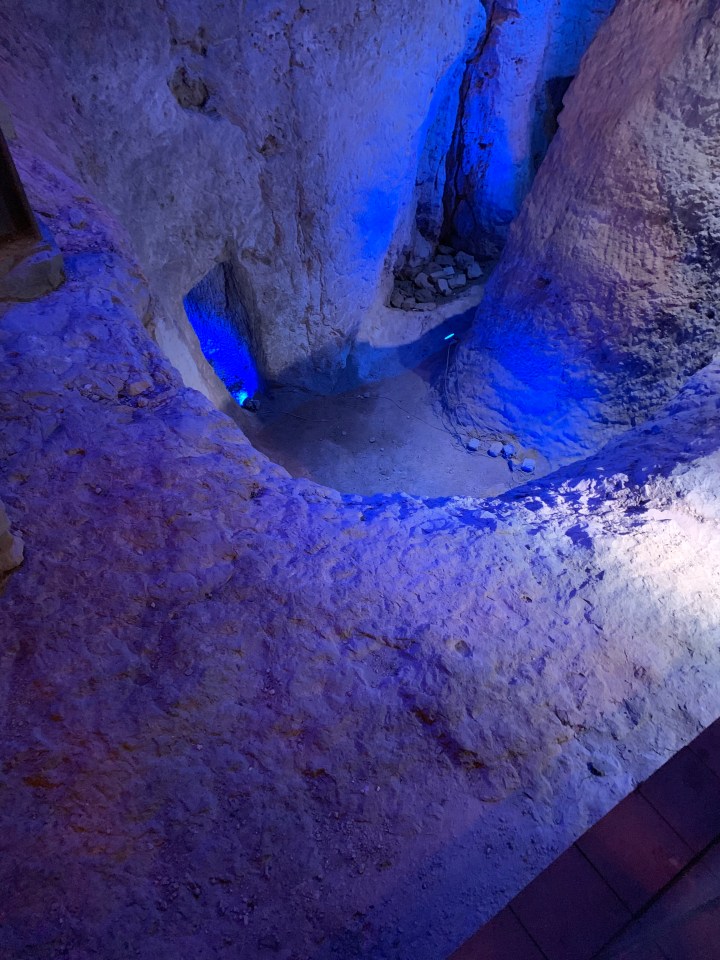
Time for another tunnel! We walked down into passageways beside the main water source for ancient Israel, the Gihon Spring. During the reign of King Hezekiah, he blocked part of the spring and channeled water to another part of the city during an Assyrian siege. A few of our group decided to walk through Hezekiah’s tunnel, where water goes thigh-high at times. That’s an exploration I chose not to do–it sounded dark and scary!
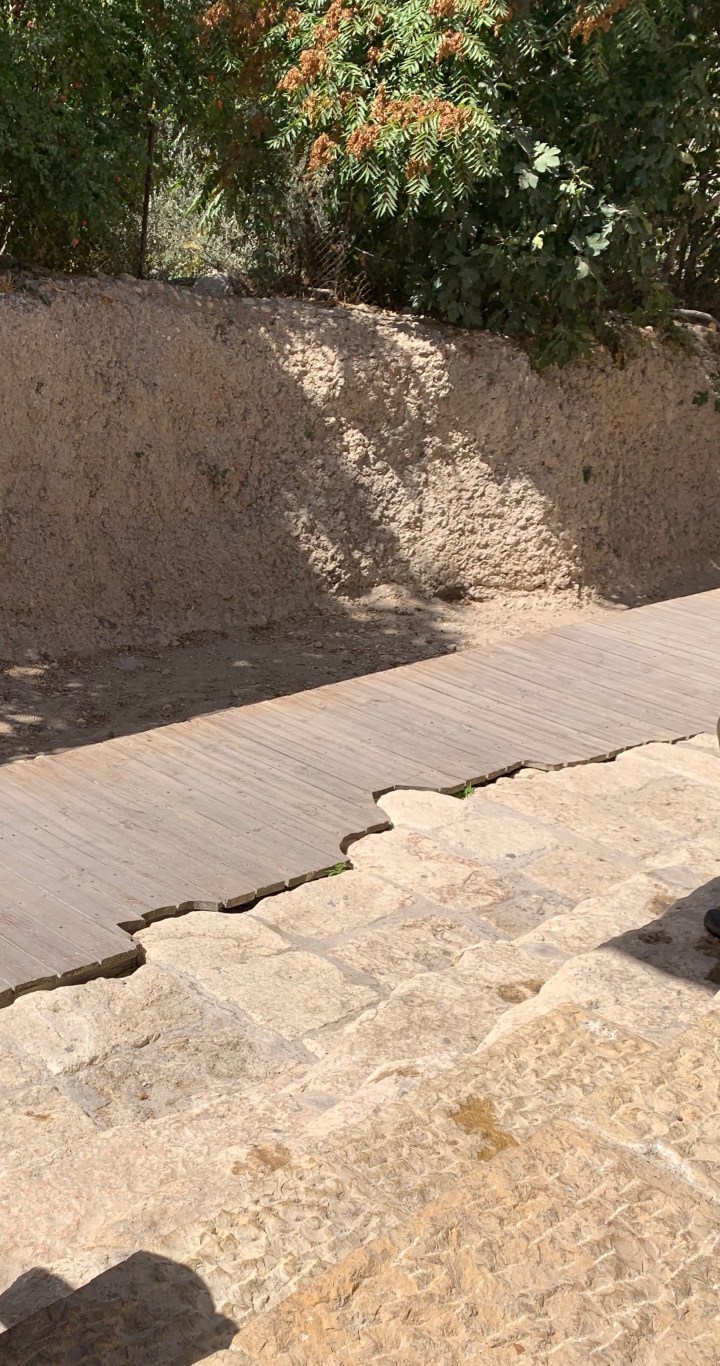
Our last stop before lunch was at the Pool of Siloam, an area only partially excavated at present. I’m grateful buses finally picked us up outside the excavated areas. Buses can’t fit into most parts of the Old City. The only forms of transportation other than walking include motorcycles, small cargo tractors, bicycles, and a few small cars that have been permitted to enter.
After lunch we had free time; John caught up on his email communications, and I had underwear to wash. Woo-hoo!
 jlmazunikblog